
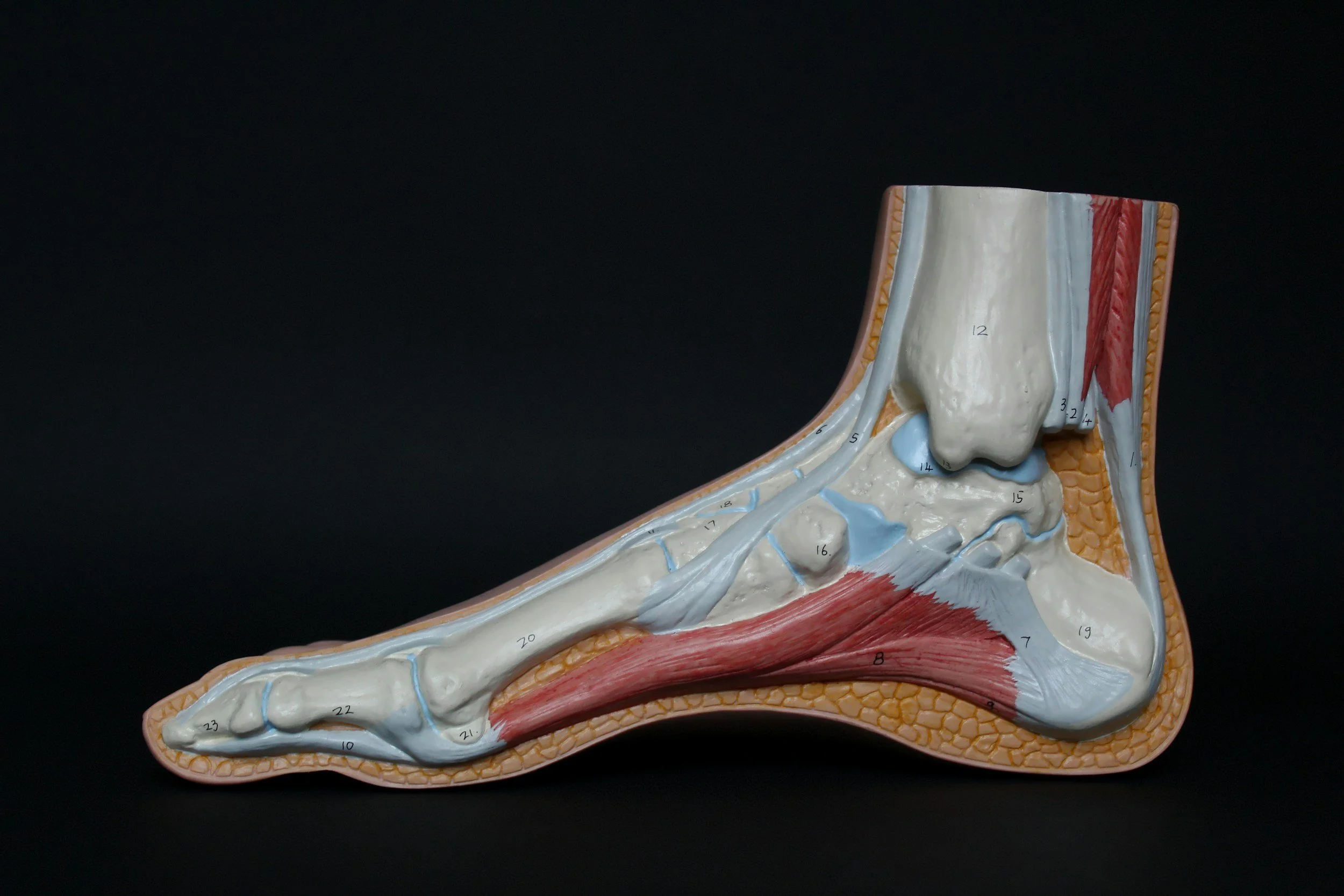
Plantar Fasciitis Physiotherapy in Yokohama
Achilles Pain During Running, Walking, or Exercise?
Foot Pain During Walking, Running, or Exercise?
Foot pain is often called plantar fasciitis and can make walking, running, standing, or exercising uncomfortable.
Many people notice:
Foot pain during the first steps in the morning
discomfort after prolonged standing
pain during walking or running
symptoms that improve and then return
frustration after trying stretching, massage, or rest
Plantar fasciitis is common in runners, active adults, hikers, and people who spend long periods on their feet.
Looking Beyond the foot
Although the pain is felt under the foot, the foot is rarely working alone.
Every step requires the body to absorb, transfer, and create force through multiple regions including the foot, ankle, knee, hip, pelvis, and trunk.
The plantar fascia is constantly responding to the demands placed upon it.
When walking, running, climbing stairs, or exercising, the foot is adapting to:
body weight
movement speed
terrain
footwear
strength
mobility
balance
training load
recovery
Sometimes heel pain develops when the body's current ability to manage these demands no longer matches what is being asked of it.
Why Does It Keep Coming Back?
Many people focus exclusively on the painful area.
However, the body functions as an interconnected system.
If movement options become limited, if certain tissues repeatedly absorb more force than they can comfortably tolerate, or if activity demands increase faster than the body's capacity to adapt, symptoms may continue to return.
The question is often not:
"What is wrong with the plantar fascia?"
but rather:
"How is the body responding to the demands being placed upon it?"
Our Approach
At Yokohama Physio, assessment focuses on understanding how your body moves during the activities that matter to you.
This may include:
walking
running
squatting
stair climbing
exercise
sport
daily activities
We look at how different parts of the body work together to manage force and movement rather than focusing solely on the painful area.
Rehabilitation may include:
movement assessment
exercise rehabilitation
lower limb strengthening
calf loading
balance and coordination training
mobility exercises
walking and running modifications
gradual return-to-activity planning
Building Capacity, Not Just Reducing Symptoms
The goal is not simply to make the heel hurt less.
The goal is to help the body become more adaptable to the demands of daily life, exercise, work, and sport.
Many people benefit from gradually improving:
strength
movement options
load tolerance
confidence with the activity
so that walking, running, and exercise become easier to manage over time.
Plantar Fasciitis Physiotherapy for Runners and Active Adults
Whether you are training for a race, preparing for a Hyrox event, returning to exercise, or simply trying to stay active, rehabilitation should reflect your goals and the demands of your lifestyle.
English-speaking physiotherapy is available in Yokohama for runners, active adults, expats, and individuals seeking a movement-focused approach to heel pain.
Frequently Asked Questions
-
Heel pain is often influenced by more than the foot itself.
Walking, running, work, exercise habits, recovery, strength, and overall activity levels can all affect how much demand is placed on the foot.
If the body's capacity to manage those demands has not improved, symptoms may return even after temporary relief.
Physiotherapy focuses on helping individuals gradually build strength, movement options, and confidence with activity.If the overall demands placed on the body continue to exceed its current capacity, symptoms may return even if the tendon itself feels better temporarily.
Treatment focuses on helping the body become more adaptable to those demands through movement, strength, and progressive exercise.
-
Stretching and massage may help some people manage symptoms temporarily.
However, long-term improvement often requires helping the body better tolerate the demands of walking, standing, running, and daily activity.
This may involve strengthening, exercise progression, load management, and improving overall physical capacity.
-
Not necessarily.
The goal is often to find an amount and type of activity that the body can currently tolerate while gradually building capacity over time.
For many people, modifying training is more helpful than completely stopping movement.
-
Not necessarily.
Many runners can continue some level of activity while modifying training volume, intensity, or frequency.
The most appropriate approach depends on symptoms, goals, and how the body responds to loading.
-
The body functions as a connected system.
During walking and running, forces are shared across multiple joints and muscles.
Understanding how the body moves as a whole can provide useful information when managing foot pain and returning to activity.
-
Recovery varies depending on symptom duration, activity demands, lifestyle factors, and rehabilitation consistency.
Some people improve within weeks, while others benefit from a longer-term approach focused on gradually building physical capacity.
-
Yes.
Heel pain is not always related to foot shape or arch height.
Many factors can influence symptoms, including activity levels, training load, recovery, strength, and overall movement demands.
-
The right amount of exercise can often be helpful.
The key is finding activities and loading strategies that match the body's current capacity and gradually progressing over time.
Rehabilitation aims to help individuals remain active while managing symptoms appropriately.
-
Yes.
Many people continue to improve even after symptoms have been present for a long time.
Rehabilitation often focuses on gradually increasing the body's ability to tolerate movement, activity, and exercise rather than waiting for symptoms to disappear completely before becoming active.
-
Yes.
Yokohama Physio provides English-speaking physiotherapy for expats, residents, and visitors in Yokohama and the Tokyo area.